Core Functions
General radiographic exams
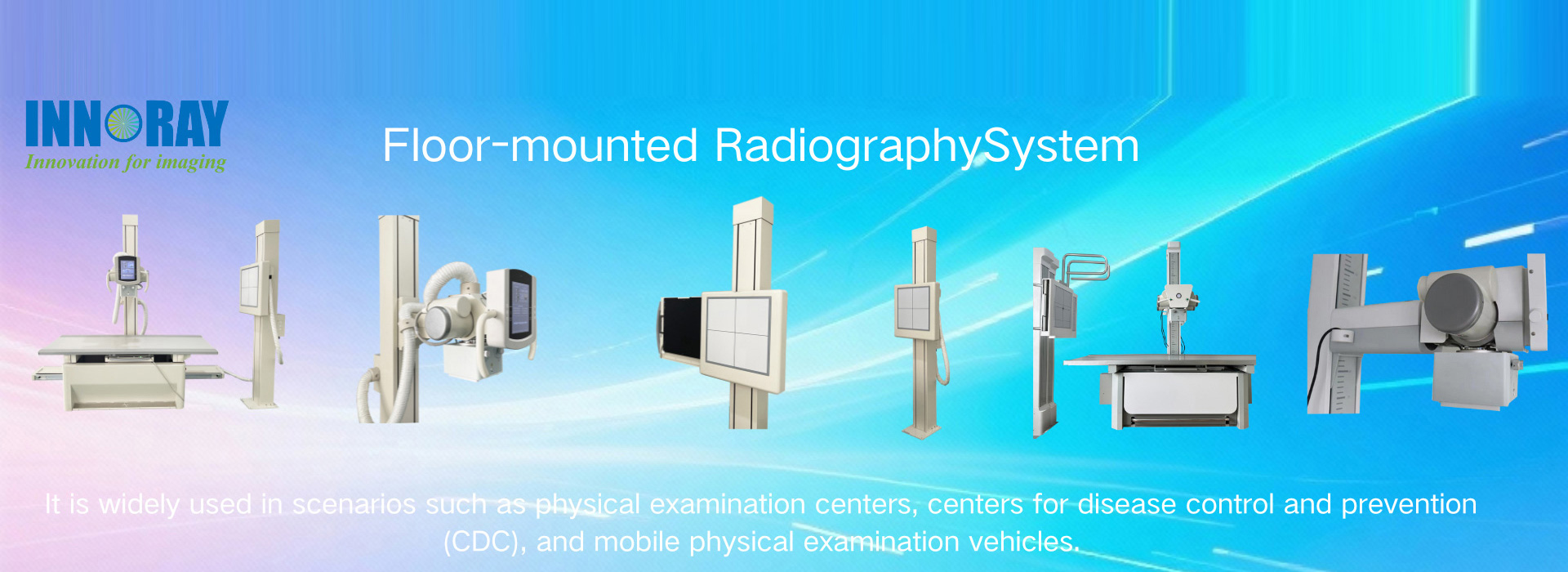
Captures high-quality images of multiple body parts (chest, abdomen, limbs, spine, etc.) for routine diagnostic needs (e.g., fracture detection, lung condition assessment).
High-precision positioning imaging
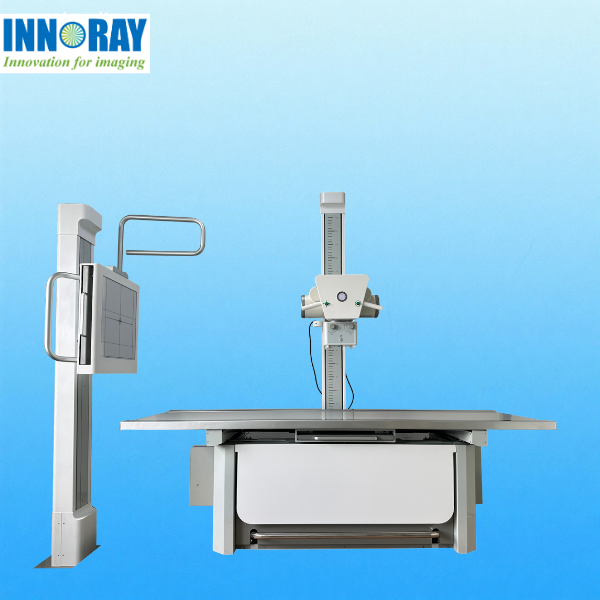
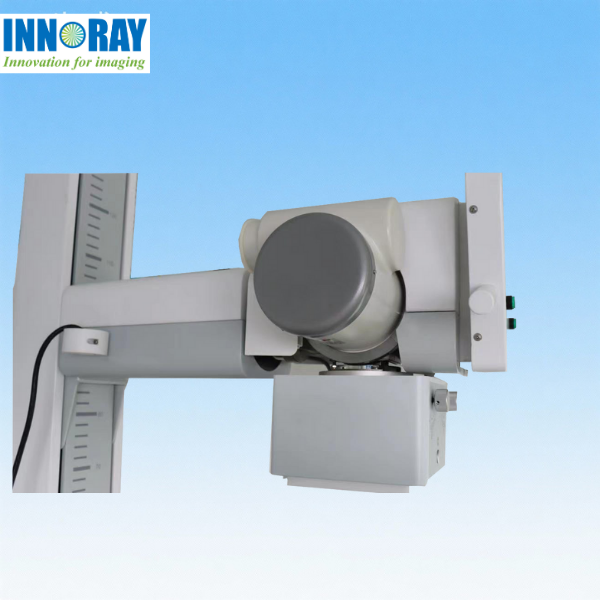
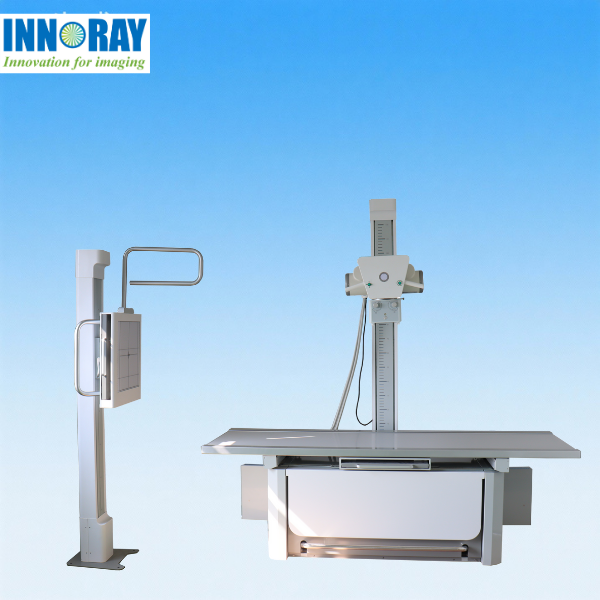
Supports flexible adjustments (vertical/horizontal movement of the X-ray tube, adjustable table height) to align with anatomical regions, ensuring accurate image targeting.
Digital image processing
Uses DR detectors to generate instant digital images, with built-in post-processing (e.g., contrast enhancement, noise reduction) for clearer diagnostic details.
PACS integration
Transmits images directly to hospital imaging systems for centralized storage, remote review, and seamless collaboration between clinicians.
Key Advantages
Superior image quality
Equipped with high-resolution flat-panel detectors and advanced X-ray generators, delivering sharp, low-noise images while minimizing radiation dose (dose reduction by 30-50% vs. traditional systems).
Efficient workflow
Features one-button exposure, preset protocols for common exams, and fast image acquisition (≤5 seconds), reducing patient waiting time and increasing daily throughput.
Ergonomic design
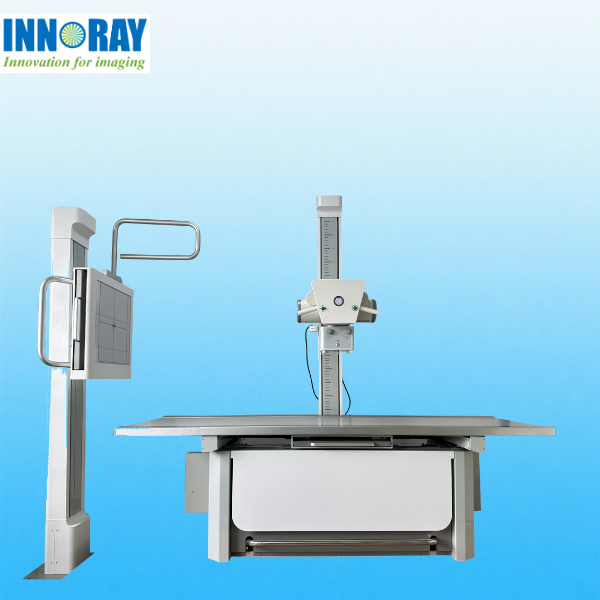
Adjustable table height (suitable for wheelchair users), flexible tube positioning, and intuitive touch-screen operation enhance comfort for both patients and operators.
Durability & stability
Heavy-duty fixed structure ensures consistent imaging performance; designed for high-frequency use in busy radiology departments.
Scalability
Compatible with advanced features (e.g., dual-energy imaging, AI-assisted diagnosis) for future functional upgrades, adapting to evolving clinical needs.