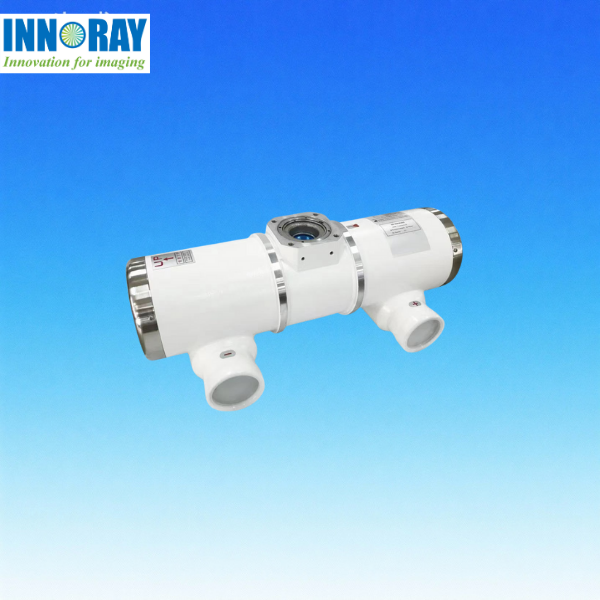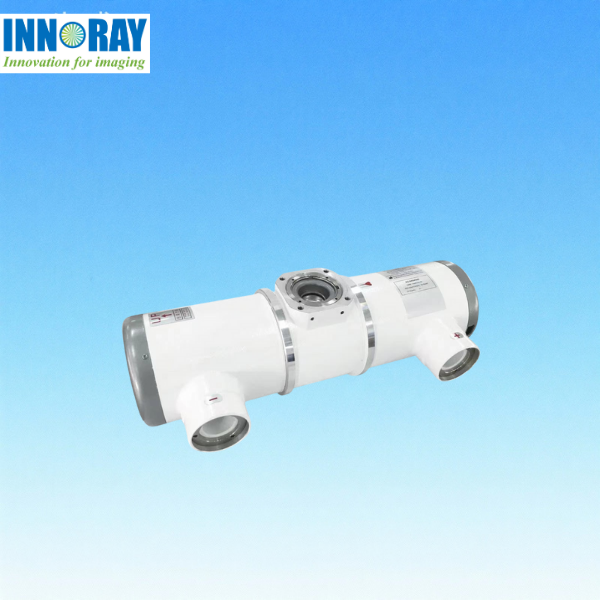
Functions
X-ray generation
Converts electrical energy into X-rays via electron collision (electrons emitted by the cathode collide with the anode target), providing radiation sources for radiographic imaging.Radiation parameter regulation
Matches the generator’s voltage (kV) and current (mA) to control X-ray energy and dose, adapting to imaging needs of different body parts/tissues.Stable continuous operation
Adopts heat dissipation structures (e.g., oil cooling) to maintain stable performance during continuous exposure, avoiding overheating damage.
Advantages
High imaging quality
Uses high-purity anode targets (e.g., tungsten) and precise electron focusing, producing high-energy, uniform X-rays to ensure clear, low-noise images.Long service life
Equipped with wear-resistant cathode filaments and efficient heat dissipation systems, extending the tube’s service life (≥50,000 exposures under normal use).High device compatibility
Custom-designed for INNORAY’s medical/veterinary DR/X-ray systems, enabling seamless integration without parameter debugging.Safety & compliance
Complies with international radiation equipment standards (e.g., IEC 60601), with leakage radiation levels far below safety limits.
Applications
Medical radiographic imaging systems
Used in INNORAY’s mobile DR, fixed DR, and bedside X-ray machines to support clinical exams (chest, limb, etc.).Veterinary radiographic imaging equipment
Provides radiation sources for INNORAY’s veterinary DR/X-ray machines, supporting pet disease diagnosis (fracture, lung infection, etc.)Radiographic equipment maintenance & replacement
Serves as a replacement part for INNORAY X-ray systems when the original tube is damaged or reaches its service life.